Local SEO: A Complete Guide
Local SEO is an essential lever in the visibility strategy of local shop owners. Here’s what you need to know about local search engine optimisation.
What Is a Local SEO Strategy?
What Is Local SEO, Exactly?
Search engine optimisation allows brands and businesses to improve how their pages rank in the search results, boost their online visibility, and increase organic traffic to their websites. Local SEO – or local search engine optimisation – is the location aspect of this discipline. For several years – and since the Pigeon Update of 2014 – Google has been relying on location settings to generate its search results. Whenever a user looks up a product or service, the algorithm takes their geographic location into account (IP addresses, active geolocation on their mobile phones, or queries that contain the name of a place) to offer more relevant results. In other words, local SEO may be summed up as all the methods and levers available to help position a company/brand in local search engine results.

How Do Local Search Results Appear on Google?
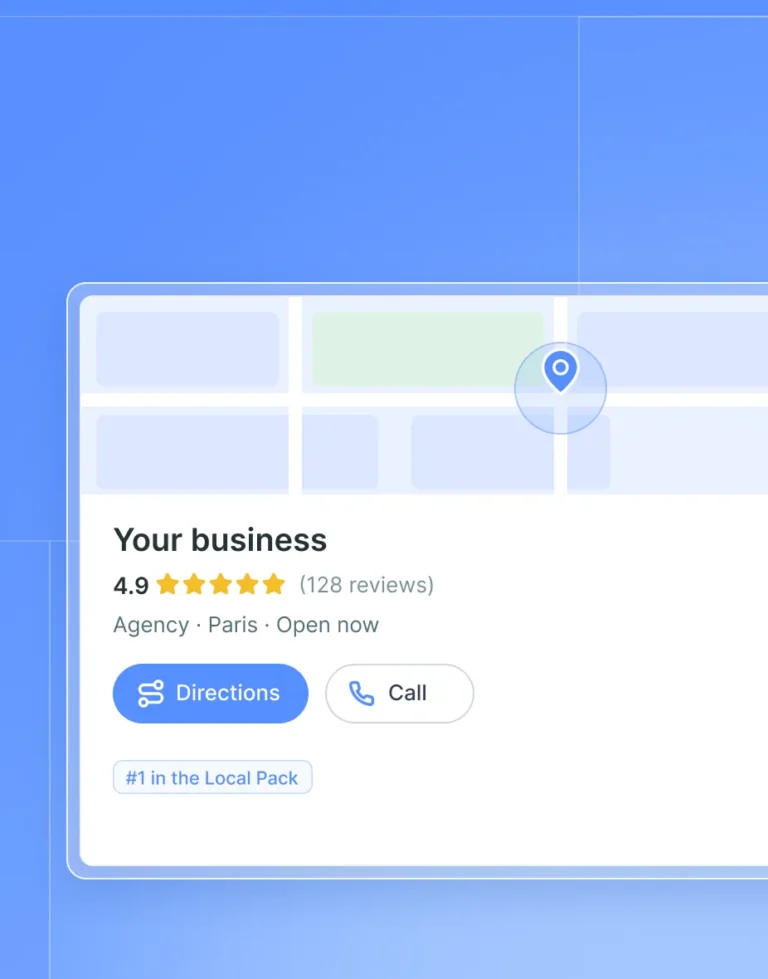
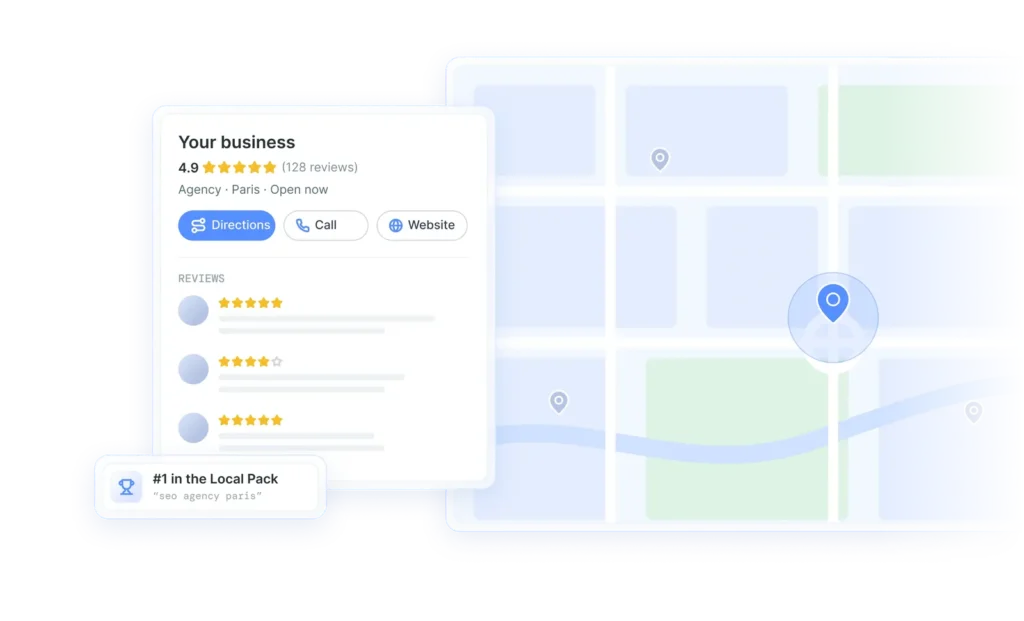
Google’s SERP (Search Engine Result Page) is not always identical. It adapts to the nature of the queries made by Internet users. When giving results for a search with a local scope, Google provides “traditional” results (a list of organic links that point to various types of websites), as well as, at the very top of the SERP, locally defined results based on the activity, products, or services the user is looking for. That’s what Google calls the Local Pack. This means that if a user types in “pizza place in Dorchester”, or even just “pizza place” if they happen to be in Dorchester at the time, they’ll be shown three different restaurants that offer pizza in the area. The results also display any information that could be useful to the potential customer. Someone who performs the exact same search in London, Manchester, Cardiff, Glasgow, or any other town will get completely different results.
Who Is Local SEO For?
Due to the location-based nature of the results served to Internet users, local search engine optimisation is primarily for businesses offering their products or services in a specific geographic area. It could be a region, a county, a town or city, a borough, a neighbourhood, etc. It typically concerns merchants or shop owners with a local customer base, whether or not they run a brick-and-mortar store. With that said, local SEO can also appeal to national brands whose ambition is to have their outlets rank for different cities. This applies to restaurant chains, real estate companies, and food stores.
National SEO vs. Local SEO
National SEO
Local SEO
Video: Local SEO, How to Be Visible on Google?
Watch our video on local SEO.

Targeted Visibility: The Purpose of Local SEO
Local search results enjoy excellent visibility in Google’s SERP. Because they showcase a map that provides store locations, the “Local Pack”, or “Google Maps Pack” show up at the top of the results, above organic links. They feature the three best suggestions that could meet the users’ expectations. For a business, Local Pack integration constitutes a huge competitive advantage as 44% of clicks go to one of the inset results (with a good balance between the three, each receiving between 15 and 18% of clicks). The pack boosts conversion by an average of 500% compared to organic and paid links (Renolon). It makes targeted visibility the main objective of any search engine optimisation campaign. There’s a very simple test: Type in your field of activity along with your city or town on Google and check whether your business appears in the Local Pack.
Naturally, visibility isn’t everything. In marketing, it doesn’t even begin to address the overall goal, which is to generate sales to boost revenue. Fortunately, local search engine optimisation doesn’t stop with improving your online presence. It can do much more, as we’re about to find out.
Other Benefits of Local SEO for Your Business
Providing a Relevant Response
By having your business rank in the local pack, you do more than just secure your online presence: You provide Internet users with a relevant and concrete response. Whether they’re looking to make a purchase, order take-out, or find a store’s opening times, what they want is instant, precise information. And that’s exactly what the Local Pack allows you to offer them!
Standing Out From the Competition
As a local business, you may find it hard to rank for nationwide queries that are highly competitive. Local search engine optimisation is a great way to focus on your catchment area without having to measure up to big national brands. And, in passing, you get to stand out from your direct competitors who haven’t (yet) optimised their websites for local SEO.
Improving Your Local Reputation
The more visibility a brand enjoys, the more popular it gets. Local optimisation does a great job of boosting your reputation. It does so by highlighting – among other things – customer reviews that your prospects will most likely peruse before making a purchase. This feedback can improve your conversion rate by as much as 190% for lower-priced items and up to 380% for more expensive products (Spiegel Research Center).
Acquiring Qualified Audiences
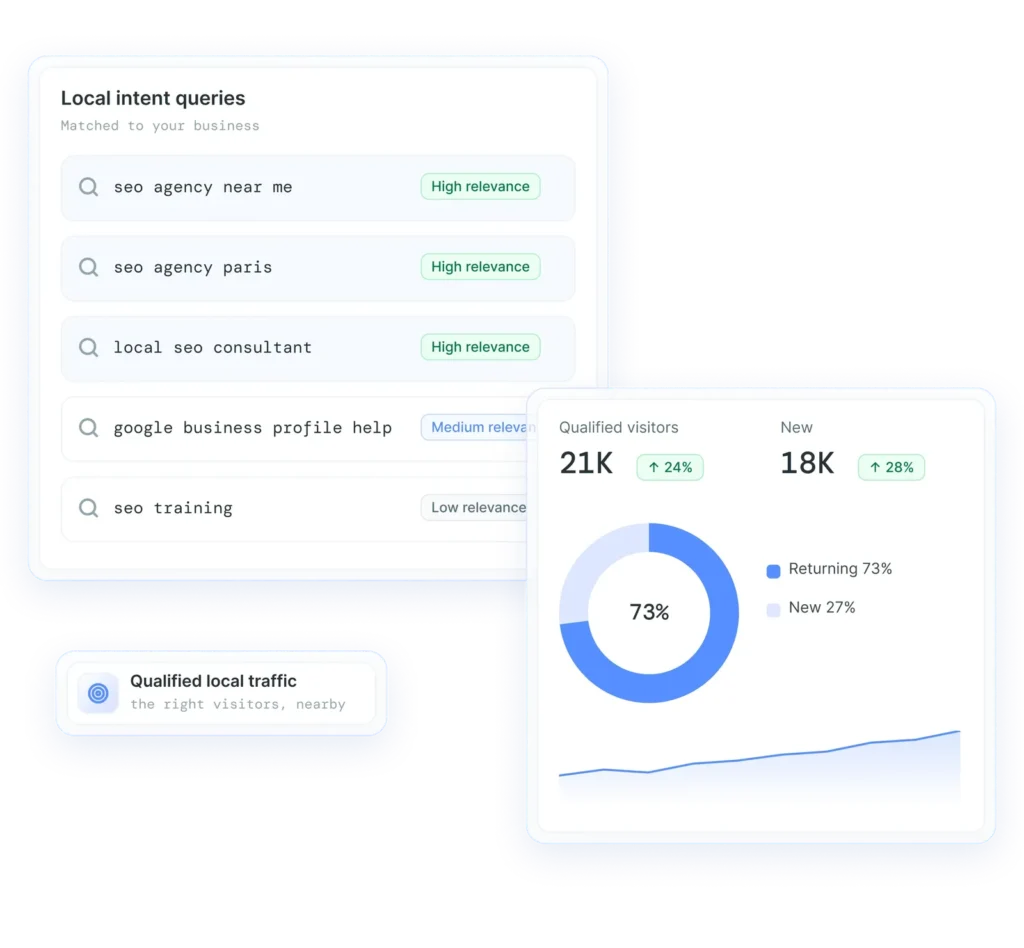
Internet users who perform local searches have a strong potential for conversion. That’s because when a user asks Google about how close a restaurant is, they’re more than likely intending to go! In other words, audiences you reach through the Local Pack (or through locally optimised organic links) are more qualified than those who make national-type queries.
Getting Fast Results
As you know, the effects of search engine optimisation can take a long time to show results. With local SEO, on the other hand, the response can be lightning fast. Once the main levers have been activated – namely setting up your Google Business Profile (see Part 3 of our guide) – your company’s all set to show up in the Local Pack and start generating clicks quickly.
Enjoying a Profitable Strategy
Search engine optimisation strategies tend to be the most profitable web marketing approaches – as opposed to advertising campaigns – and this also applies to local SEO. For a small business with limited funds, it’s a great way to enjoy better digital visibility while generating a high ROI, including when you entrust a specialised agency with your strategy.
How to Optimise Your Business for Local Searches?
Local SEO and the Notion or Relevance
With local search engine optimisation, the most crucial concept to consider is relevance. It’s at the very heart of Google’s project: To provide the user with a clear and precise response to their question. If a user types in “pizza place” with the obvious intent to eat pizza in the next few hours, Google comes up with options that are likely to deliver on that expectation. The most relevant results are those that 1) sell pizza, 2) are located near the user, 3) provide essential information about their services, and 4) have high user ratings. Of course, this relevance depends on the geographic location of the business – Google giving the advantage to those located within the same area as the user performing the search – and on the implementation of various local SEO levers.
Essential Levers for Local SEO
Google Business Profile
This profile – previously known as Google My Business – is one of the main pillars of local search engine optimisation. Every business can create a profile – or claim one if someone else set it up – and have it show up on Google for free as a response to local queries, both in the SERP and in Maps. Be sure to optimise it correctly by filling out all the fields, adding photos, and checking that your contact information is always up to date.
Using Location-Based Keywords
To bolster your company's presence on a local level, you need to select specific keywords to include on your web pages. These should indicate your field of business and the products/services you offer, along with the geographic area it covers. In other words, it's essential to sprinkle local queries into your content: u0022house remodeling in Liverpoolu0022, u0022SEO agency in Londonu0022, etc. Be strategic about adding these terms to your pages' HTML tags.
Website Optimisation
Local SEO doesn't end at your Google Business Profile or a few bits of content: Your entire website needs to be optimised. The first reason is that Google draws information from your web pages to reference your profile in the Local Pack as well as it can. Plus, good optimisation also allows you to show up on the organic links at the same time – which the user interprets as a sign of trust.
Mobile-Friendly Matters
Google is seeing a dramatic increase in local searches and queries that contain u0022near me nowu0022, u0022near me today/tonightu0022, or u0022open nowu0022. This proves how crucial it is to make sure your pages are suitable to be viewed on mobile, both for the sake of optimisation and to allow users to access the information they're looking for effortlessly.
Local External Links
Much like its national counterpart, local SEO relies on external links. Google assesses the popularity of a website based on the number (and quality) of links to its pages. According to Moz, the signals associated with links account for up to 28% of ranking factors on a local scale. These backlinks should emanate from locally relevant authority websites.
Review Management
The overall rating given by Internet users to a company shows up on its Google Business Profile and influences other users' decisions. According to powerreviews.com, a whopping 98% of UK consumers see reviews as an essential resource when making purchase decisions. These ratings have a massive impact on reputation and play a role in local SEO. Google looks at how often people leave reviews, the feedback itself, and the number of clicks (that good ratings always tend to boost).
Online Presence
Lastly, the more emphasis a company places on its local online presence, the better its overall SEO gets. It shows how important it is to work on your digital presence on multiple levels: customer rating platforms, GPS, social media, etc. As for directories such as the UK Small Business Directory (UK SBD), Yelp UK, Chamber of Commerce, etc., they provide u0022NAP citationsu0022 (i.e. business information such as Name, Address, and Phone Number). These don't have the same bearings on SEO as they used to, but they remain noteworthy levers in terms of local search engine optimisation.

How to Measure Your Performance in Local SEO?
Measuring Results: A Must for Local SEO
As with any marketing strategy, performance assessment is a crucial step in local search engine optimisation. Keeping track of your results is an absolute must if you want to understand where you’re at in terms of your objectives. It should help you identify what will give you the best leverage for improvement and how to activate it. It also allows you to spot any optimisation issues with your Google Business Profile (which may not generate enough traffic), pinpoint pages from your website that could do with some specific optimisation, or define the most effective acquisition channels. In local SEO, the performance indicators that allow you to measure the progress of your strategy are not necessarily the same as those you would use for national SEO. To help you monitor your results, we put together a list of the most essential KPIs to keep an eye on.
Essential Key Performance Indicators for Local SEO
Understanding which indicators are relevant to local SEO and how to measure them. These are the prerequisites for anyone looking to assess their performance. Here’s a list of the most critical KPIs to keep track of.
Local Rankings Monitoring
Track the positions of your optimised pages on local keywords and where your Business Profile ranks in Google’s Local Pack and Maps. Repeat the process for each location if you have several outlets.
Result: a complete overview of your local SEO rankings, location by location.
Google Business Profile Statistics
Your Google Business Profile shows how users find you (direct, discovery or brand searches), where your profile appears (Search or Maps) and what users do. Calls, website visits, directions and photo views are all tracked.
Result: valuable data to measure and improve your local SEO performance.
Number of Customer Reviews
Google looks at the number, quality and frequency of customer reviews, which also improve your reputation and click-through rate. Collect as many as possible and always respond, especially to unhappy customers.
Result: a stronger local reputation and better visibility on Google.
Your Website Statistics
Google Analytics collects data on traffic volume and origin, pages viewed, devices, landing page performance and conversion rate. These indicators show the user journey after a local search.
Result: a local SEO strategy you can measure and optimise.
Origins of Your Various Audiences
Check the technical origin of your audiences: Google Search or Maps, social media, directories or review platforms. Then check their geographic origin to see if you reach your catchment area.
Result: a clear view of which channels and areas bring you local customers.
Your Competitors' Web Rankings
Compare your local SEO performance with direct competitors targeting the same area. Look at their rankings, their Google Business Profiles and the keywords they use.
Result: inspiration from what works best in your local market.
Our Commitment
Expertise
Since 2010, we have worked with over 2000 clients across 90 countries.
Passion
We are a team of passionate, industry-focused individuals who are committed to your success.
Performance
We’re committed to implementing a data-driven strategy, making a real impact on your bottom line by providing avenues for growth.
Any questions?

Let’s talk