Podcasts: A Powerful Format for Brands!
With their resounding success, podcasts are rapidly establishing themselves as an essential content format for effective professional communication.
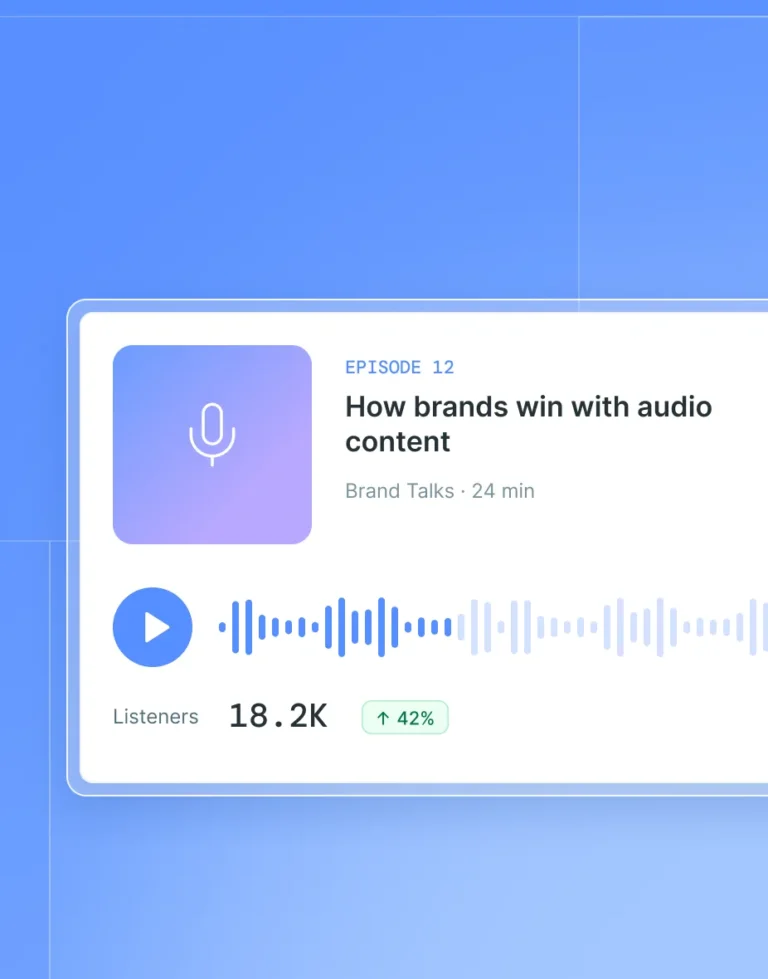
Why have podcasts become so important?
The Podcast Phenomenon: A recent but explosive rise
In 2004, there were roughly 3,000 podcasts. By February 2018, that number had skyrocketed to 500,000, and by January 2020, it had reached almost 850,000 (referring to shows rather than episodes). So how can this meteoric rise be explained? Podcasts perfectly align with our modern on-demand consumption habits. Whether you’re in the car, on public transport, at the gym, or even at work, podcasts can be enjoyed anytime, anywhere, and on any device (be it a computer, smartphone, tablet, smart TV, smart speakers, and more). Beyond their mobility, podcasts captivate listeners with their diverse range of compelling topics and in-depth analysis. In essence, they embody the essence of slow content, offering a refreshing departure from fast-paced media. Moreover, with their distinctive vocal delivery, podcasts provide a compelling alternative to traditional radio while granting listeners the freedom to choose their preferred content.

The role of podcasts in business communication strategies
Initially, brands were drawn to podcasts for their advertising potential, placing ads and engaging in sponsorships to reach wider audiences. Over time, brands like Slack and Spotify started creating their own in-house podcasts as part of their marketing efforts. This shift towards branded podcasts, known as “native” podcasts (see the table below), stems from the marketing effectiveness of this format. It allows for communication with a young audience, establishes strong connections, facilitates extensive storytelling, covers a wide range of topics, and adds value for listeners.
Replay Podcasts vs Native Podcasts
Replay Podcasts
Native Podcasts
Good to know
The term “podcast” is a combination of “iPod” (the first digital music player from Apple) and “broadcast.” Coined in 2004 by British journalist Ben Hammersley in an article published in The Guardian, the term was popularised by Apple, who integrated podcast playback functionality into subsequent iPod models.
Why Create a Branded Podcast?
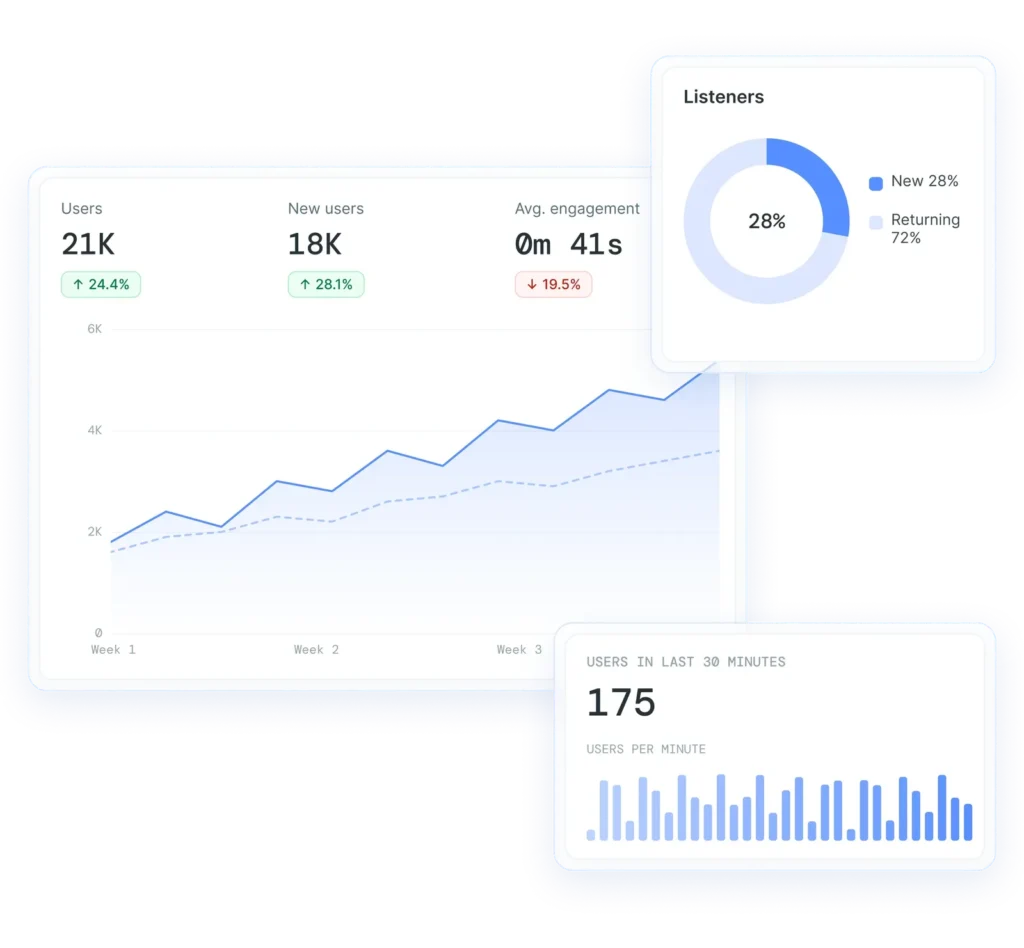
Branded Podcasts: An Untapped Opportunity
When comparing the 850,000 existing podcasts worldwide to the staggering 600 million blogs, it’s clear that the audio content format of podcasts is still relatively underexplored, despite its rapid growth. This presents a market with immense potential for businesses and brands. From a marketing standpoint, launching a native podcast show can be just as vital as starting a blog or a YouTube channel. This format offers a myriad of benefits, including high listening potential, reaching a wide audience (especially the younger demographic), establishing expertise and visibility, driving traffic and conversions, fostering engagement, and more. Let’s delve into these benefits in detail.
What are the benefits of branded podcasts?
Reaching a broad audience
The remarkable surge of podcasts and their convenient listening experience provide a golden opportunity for brands seeking to reach an increasingly diverse audience amidst an oversaturated media landscape.
Facilitating conversational marketing
Podcasts serve as the ideal platform for encouraging interactions, sparking debates, fostering a sense of closeness, and giving voice to customers and partners. This content medium enables the cultivation of intimate communication.
Generating more traffic
Podcasts act as a powerful catalyst for traffic generation: intrigued listeners naturally gravitate towards visiting the brand’s website. Alternatively, subtle prompts can be employed to subtly guide them there.
Driving more conversions
Podcasts not only provide value to listeners but also serve as an excellent tool for showcasing the brand and its products/services. They create the impetus to convert prospects who are further along in their buyer’s journey.
Building brand awareness
As podcasts gain popularity, they become an indispensable branding tool for companies aiming to stand out from the competition and elevate their brand visibility.
Reinforcing your position as an expert
By implementing a tailored content marketing strategy, you can demonstrate your expertise and establish your company/brand as a leader in its industry and market. This makes you an indispensable authority.
Draw listeners towards other content
A podcast serves as an enticing entry point that can draw the audience towards other highly conversion-driven content. It can also be adapted into various formats such as videos, blog articles, social media posts, and more.
Encouraging audience engagement
Podcasts provide a platform to cultivate strong relationships with the audience. This receptive audience is more likely to engage with the brand and show less reluctance towards listening to adverts.
Fostering listener loyalty
The episodic nature inherent to podcasts, even in their “native” form, encourages listeners to stay tuned in, thus fostering loyalty. By subscribing to the channel, they stay informed about new episodes and never miss out.
Good to know
There are two ways for a company or brand to take advantage of podcasts: sponsoring a show that shares an affinity with the advertiser (as exemplified by Guerlain’s sponsorship of the web show “La Poudre”) or creating their own podcast as part of a marketing initiative to enrich their content strategy or brand content. The latter option is preferable for maintaining complete creative control.
Creating Your Brand Podcast
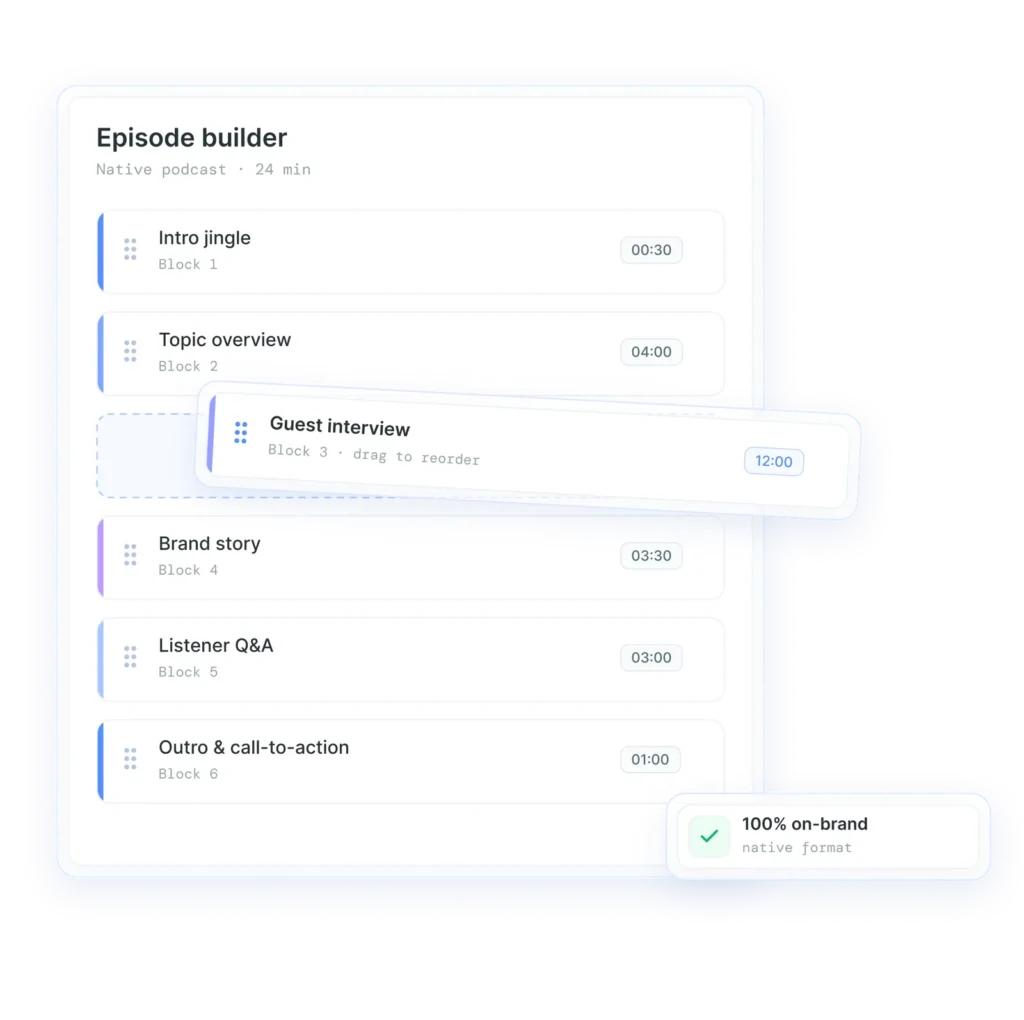
Creating a Native Podcast: Step-by-Step Guide
If your company or brand wants to incorporate podcasts into your content strategy, the best approach is to create your own original shows instead of solely partnering with existing podcasts for advertising purposes. However, creating a podcast requires specific technical skills, equipment, and knowledge of key steps. It’s crucial to entrust the production to a specialised service provider. Let’s walk through these steps and the essential elements needed to produce a high-quality podcast that resonates with your audience.
Creating your brand podcast: a step-by-step guide
Choose your topic
Your topic depends on your field of activity, your target audience and the show format you want. List relevant themes, break them down into subjects and plan enough content for your podcast’s length.
Result: a clear editorial line and enough topics to feed your brand podcast over time.
Structure your episodes
An episode can be solo, a roundtable, a report, an interview, a testimonial or a fictional story, depending on your topic and audience. Once the format is chosen, a detailed script structures the episode.
Result: well-built episodes and much less time spent recording.
Prepare your elements
A podcast is more than its main speakers: intros and outros, background music, voice-over introductions and sound effects add rhythm and depth. Have them ready before recording.
Result: a lively, professional show that keeps listeners engaged.
Work on your metadata
Metadata tells users what your podcast is about and helps them find it in podcast apps. Give your show an appealing name, write a keyword-rich description and choose the right category.
Result: a podcast that ranks better in audio apps and is discovered by new listeners.
Prepare your equipment
A good recording needs a quality microphone for each participant (with a tripod if needed), comfortable headphones and a pop filter. A multitrack recorder makes editing easier with several speakers.
Result: professional sound quality, essential for keeping your listeners.
Record your podcast
Choose recording software such as Audacity, Adobe Audition or ZenCastr and settle in a quiet space, ideally a studio. Record the episode following the script while keeping a natural tone.
Result: a clean, natural recording that listeners enjoy to the end.
Edit your podcast
Editing removes everything unnecessary: pauses, verbal fillers, throat-clearing and off-topic remarks. It is also the moment to synchronise audio elements.
Result: a smooth, well-paced episode at the right length, ready to publish.
Good to know
Choosing the right topic is crucial. Being one of the pioneers in exploring a specific theme or concept, or featuring experts in a particular field, can significantly contribute to the popularity of your podcast.

How to launch and promote your podcast
Just like any digital content, a podcast episode needs to be uploaded and made available to audiences through a specialised hosting platform. It should then be submitted to audio applications that will distribute and potentially feature it to users. This process can be complex, but we’ll guide you through it step by step!
Launching your podcast: a step-by-step guide
Podcast hosting
Audio apps do not host podcasts; they relay them through an RSS feed, so you need a specialised host such as Ausha, Buzzsprout, Castos or Transistor. Encode your files in a widely supported format like MP3.
Result: a reliably hosted podcast with an RSS feed ready for every platform.
Distribute your podcast
Once your episodes are hosted, submit the podcast’s RSS feed to audio apps through their dedicated forms. Focus on the most popular ones, such as iTunes, Spotify, Google Podcasts or Stitcher.
Result: a podcast available where your listeners are, for maximum potential reach.
Spread the word
Promote your podcast to your target audience through your website (blog posts, transcriptions), email marketing, social media and press relations. Word-of-mouth does the rest.
Result: a podcast known to your target audience, with listens growing from the first episodes.
Prepare for launch
A teasing phase can come before promotion, for example with a landing page and a subscription form for the upcoming podcast. Building an audience before launch ensures enough listens.
Result: a successful launch with enough listens to gain visibility in audio apps.
Request feedback
Encourage listeners to leave ratings and reviews and to subscribe, with small rewards if needed. Positive comments boost your podcast’s popularity.
Result: a more visible podcast that attracts new listeners.
Plan for the future
Like any content strategy, a podcast needs regular publication to convince and retain listeners. Frequency matters less than consistency and quality.
Result: a loyal audience looking forward to every new episode of your brand podcast.
Monetise your podcast
Once you reach a certain audience size, you can monetise your podcast: ads on the hosting page via AdSense, programmatic ad networks or ad slots sold to sponsors. You can also promote your own products or services.
Result: a podcast that becomes a source of revenue or a direct sales lever for your brand.
Good to know
For a newly launched podcast, consider preparing multiple episodes (at least three or four) to release at once. This provides ample material to offer to the audience, avoids frustration due to a lack of content, and encourages listeners to subscribe.
Do brand podcasts really work ?
It’s a valid question. Do listeners genuinely want to tune in to shows produced by companies and brands? The answer is a resounding yes, as long as these podcasts delve into topics and subjects that pique their interest, go beyond mere brand promotion, and offer highly valuable content that enriches their experience. We’ve handpicked four examples of podcasts published by brands across various industries to showcase how this format can inspire listeners.
Examples of successful brand podcasts
Hermès
Stepping into the world of luxury. With their emphasis on immersion and meticulous attention to providing an exceptional experience, one could argue that native podcasts were tailor-made for luxury brands. Hermès perfectly grasped this concept with their podcast that grants a voice to key figures within the company. The aim? To offer enchanting glimpses into the brand’s world with each episode, typically lasting around 10 minutes. Each “season” carries an evocative title such as “Le Faubourg des rêves” (The Dream Boulevard) or “Le Monde d’Hermès” (The World of Hermès). These shows are meant to be savoured and revisited without restraint – that’s the epitome of true luxury!
Tinder
Empowering young voices. Tinder, renowned for its focus on discovery and freedom (both in romance and sexuality), incorporated these very themes into their podcast launched in 2019, aptly titled “Libre(s)” (Free). Over episodes ranging from 20 to 30 minutes, Marion Séclin and Albane Linÿer create a platform for members of the 18-25 age group to express themselves freely on topics such as relationships, love, friendship, and identity. The discussions are unfiltered, fostering an immersive experience. It’s a brilliant way to engage a young audience, squarely within the app’s target demographic, who are seldom given such an opportunity to be heard.
Figaret
A glimpse into the realm of French entrepreneurship. Renowned ready-to-wear brand Figaret has opted for a classic podcast format to give a platform to those who epitomise French entrepreneurship. Through 45-minute interview episodes released every fortnight, the show allows these entrepreneurial adventurers to share their ambitions, dreams, setbacks, and dashed hopes. Produced by Nouvelles Écoutes and hosted by the deputy editor-in-chief of Challenges magazine, the podcast delves into the captivating world of the brand. With its aptly titled series, “Mouiller la chemise” (Getting One’s Hands Dirty), it truly captures the essence of the entrepreneurial spirit.
Lapeyre
Practical (and immersive) tips for your home. In 2019, Lapeyre launched a podcast that perfectly aligns with its mission: “Réponses d’experts” (Expert Answers). The concept is simple yet effective: experts in various areas relevant to the brand’s expertise, such as kitchens, bathrooms, and home renovations, provide valuable advice and concrete solutions to listeners. Led by journalist Céline Augier, the podcast aims to guide audiences through their home improvement projects by offering a wealth of diverse content. Hosted on Lapeyre’s dedicated digital platform for home design, “Passion Maison,” this podcast is still in its early stages but has already garnered considerable success with its available episodes.

Our Commitment
Expertise
Since 2010, we have worked with over 2000 clients across 90 countries.
Passion
We are a team of passionate, industry-focused individuals who are committed to your success.
Performance
We’re committed to implementing a data-driven strategy, making a real impact on your bottom line by providing avenues for growth.
Questions? Find your answers

Let’s talk