Web Copywriting: Creating Effective and Optimised Content
Web copywriting is the art of crafting content that is tailored to digital constraints and often optimised for search engines.

What exactly is web copywriting?
Web copywriting: a definition
Web copywriting is the discipline of writing content intended for publication and consumption on the internet. However, this practice comes with a unique set of constraints to adhere to and composition rules to understand. Behind the term “web copywriting” lies a complex reality, distinct from the guidelines that govern print media writing or journalistic writing. The goal here is to publish content that caters both to internet users who will read it and search engines that will index and position it in their results list (thereby making it visible). In other words, writing for the web involves simultaneously meeting the demands of online consumption and the criteria for search engine optimisation – this is where web copywriting intersects with SEO.

Why choose web copywriting?
Web copywriting serves as the foundation of content marketing, a strategy that revolves around creating and publishing highly valuable content. But why should you consider web copywriting? What benefits can this strategy offer you?
Why choose web copywriting?
Improve your SEO
Search engines, particularly Google, highly value quality content. They prioritise and showcase it prominently in SERPs, thereby boosting your SEO.
Target keywords
The more web content you publish, the more keywords you can target, increasing your chances of ranking pages in search engine results.
Generate traffic
The visibility gained through your content contributes to generating traffic to your website, whether it’s from search engines or other acquisition channels.
Publish engaging content
Google loves active websites, and regular content publication adds freshness to your site, capturing the attention of search engine bots.
Encourage interactions
Web copywriting aims to engage and elicit responses from internet users, fostering interactions and encouraging content sharing on social networks.
Boost conversions
Content serves a dual purpose—not only does it attract traffic, but it also caters to users at different stages of readiness, guiding them towards conversion.
Establish authority
Publishing expert content helps establish your company/brand as an authoritative figure in its industry, positioning you as a market leader.
Foster user loyalty
Content can also be utilised for customer retention purposes, such as newsletters or exclusive premium content for your clients.
Maximise ROI
Content marketing stands out as one of the most cost-effective strategies, being 62% less expensive than traditional marketing (DemandMetric).

Writing tailored to the constraints of the web
The uniqueness of web copywriting lies in its exclusive digital publishing platforms, such as websites, blogs, social media, and emails. As a result, writing “for the web” needs to consider the specific constraints imposed by the online landscape, which can be grouped into two categories: how content is consumed and the need to appeal to search engine algorithms for visibility.
Writing tailored to the constraints of the web
Consumption constraints
Consuming content on the web differs from traditional physical mediums. Digital writing must adapt to the way content is consumed: quick scanning, mobile browsing, frequent interruptions, and more. This calls for well-structured and properly organised content that highlights essential information, employing concise sentences and accessible terms.
Algorithmic requirements
In addition to targeting internet users, web copywriting also addresses the algorithms used by different channels. Search engines, in particular, rely on crawler robots to discover, comprehend, index, and rank web pages. Therefore, the structure, data hierarchy, and utilisation of SEO techniques (HTML tags, microdata, etc.) are essential for success.

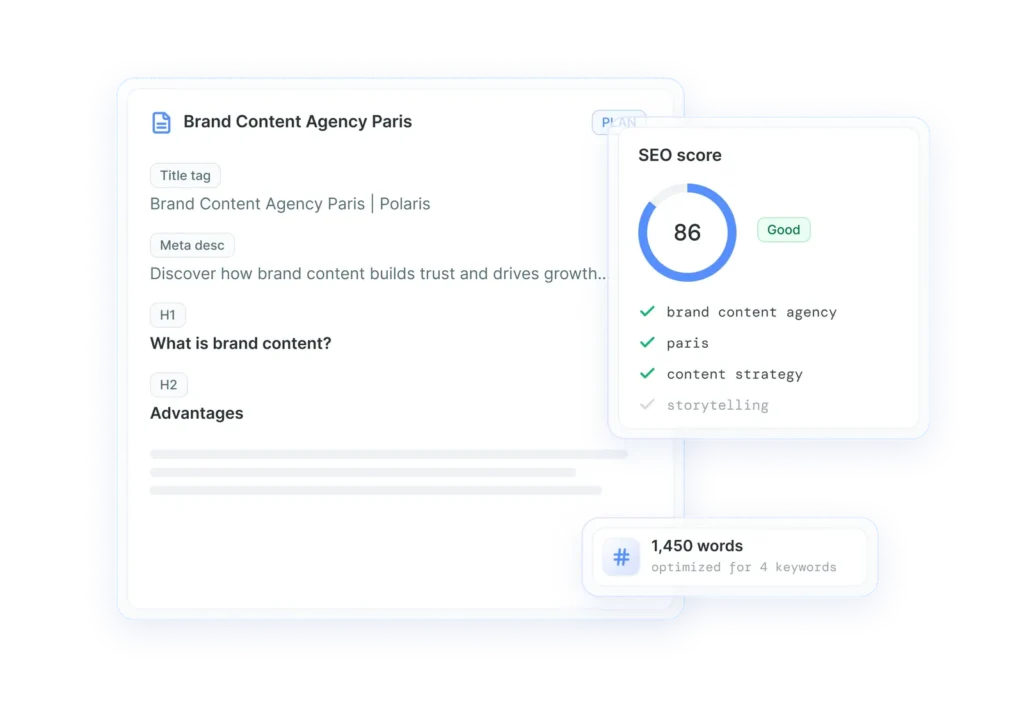
Is web copywriting always “SEO”?
Web copywriting and SEO are often seen as intertwined. However, web copywriting can also be used independently, without solely focusing on SEO aspects—especially when the content is not intended for search channels. For example, white papers or case studies used as lead magnets (downloadable documents on landing pages to generate leads), press releases sent to media outlets, or even email campaigns (newsletters, promotional offers, etc.). In such cases, while still adhering to web requirements, writing can be liberated from the constraints related to SEO optimisation.
How to prepare web copywriting content
Preparing your content: who – and what – are you writing for?
At the heart of web copywriting lies your target audience: the people you choose to write content for, including prospects, clients, partners, journalists, the general public, experts, and more. It’s crucial to understand your readers and define the key elements of the content you want to offer them, aligned with your marketing objectives. In this section, we’ll focus on two essential aspects of preparation that are integral to web copywriting: identifying the intended consumers of the content once it’s published and determining the content’s core message.

Choosing your target audience: the role of personas
Who is your target audience? Since it’s impossible to address everyone simultaneously, in marketing, “personas” are used: customer profiles that aim to represent a specific segment of the target audience. Each persona, based on your understanding of your ideal customers, varies depending on the nature of the target (B2B or B2C). It considers characteristics such as demographics, location, interests, online behaviour, industry (for businesses), and even the customer’s stage of maturity. Web copywriting can tailor its content to consumers based on their position in the buying journey, whether they are in the discovery, consideration, or decision phase. The level of maturity influences the challenges faced by the target audience, the type of solutions to offer, and even the tone and format of the content written for them.

Selecting relevant keywords for content
In many cases, web copywriting focuses on creating content that will appear in search engine results. As a crucial and indispensable step in content preparation, it’s important to understand how internet users search for information on platforms like Google. Specifically, you need to determine the keywords they use when entering search queries in order to find what they’re looking for. These keywords are then identified, organised, and strategically incorporated into your content based on the topic, desired goals, and the search intent you aim to fulfil. There are various methods to identify these relevant keywords.
What are the key elements of SEO optimisation?
Your business
Start by considering your business, products/services, and values to identify relevant keywords to use in web copywriting.
Your target audience
Put yourself in the shoes of your target audience: How do they search for information? What terms do they use on Google? What topics are they interested in?
Your sales team
Engage your sales team and gather insights from them regarding frequently asked questions by customers. These insights can serve as a solid foundation for finding relevant keywords.
Your competitors
Take a look at what your competitors are doing: Which keywords are they targeting? Which pages are achieving the most success? Learn from their strategies.
Tools
Make use of professional keyword research tools. There are numerous options available, such as Google Keyword Planner, Moz, SEMrush, Answer the Public, and more.
Trends
Explore Google Trends to understand the current trends surrounding your industry or specific products/services. This can help you identify key expressions to incorporate into your content.
Good to know
Picking the right topic and choosing the right format: Web copywriting involves more than just writing blog articles. In fact, this discipline encompasses a wide range of formats, from simple and concise ones like emails and product descriptions, to longer and more complex ones such as white papers and ebooks. It also includes intermediate content with high added value, such as blog posts, case studies, interviews, expert opinions, press releases, and strategic website pages. The choice of format depends on various factors, including the target audience, the message to be conveyed, the topic to be addressed, and the specific purpose of the piece. For example, a company-related news topic could be presented as an article, an email, or a press release, while a testimonial about the use of B2B software might be best suited for an interview or a case study.
If you decide to work with a web copywriting specialist, there’s a valuable and indispensable tool to guide them in their writing process: the writing brief. This document contains all the relevant information that can assist the writer in creating the most relevant content for your needs. It typically includes an introduction to the company and the project, the specific topic to be covered, the desired format, keywords to be incorporated, the preferred tone, and more.
How to write web-optimised content
Always keep your target audience in mind when writing
In web copywriting, don’t overlook the “writing” part. It may seem obvious, but it’s crucial to remember that a few years ago, it was acceptable to create low-quality content for the sole purpose of appeasing search engines, which had lower standards back then. However, nowadays, web copywriting is primarily aimed at internet users. This aligns perfectly with Google’s goal of valuing well-crafted, relevant, and highly valuable content for those who consume it.

Offer content tailored for digital reading
Part of focusing on your target audience involves understanding their online reading habits. It’s estimated that internet users have an attention span of no more than 8 seconds. This means that content must be well-structured, clear, and concise, avoiding overwhelming readers while enabling them to grasp important information. Content hierarchy is key here: effective use of headings and subheadings (H tags), bullet-pointed lists, concise paragraphs, an inverted pyramid structure (placing the most important ideas first), and more. As for length, it depends on the format: a blog article typically ranges from 600 to 1,000 words, strategic pages like the homepage or service descriptions can have around 500 to 600 words, while product descriptions usually suffice with 300 to 400 words. However, in-depth reports or white papers may well exceed 3,000 words.
Expanding your content: essential aspects of web copywriting
Introduction and conclusion
With their limited attention span, many web users only read the introduction and conclusion. The introduction should present the topic and key issues, and the conclusion should sum up the main points and takeaways.
Result: readers grasp your message even if they skim the rest of the page.
Headings and subheadings
Readers skim content and focus on headings and subheadings, which stand out visually. Make them clear, concise and informative, and include relevant keywords for SEO.
Result: content that is easy to scan and better understood by search engines.
Semantics and optimisation
Web copywriting also addresses search engine robots. Semantic optimisation adds a variety of related terms that give context to the main query.
Result: search engines understand your content better and show it in the most relevant searches.
Reviewing and editing the content
Once the content is finished, let it rest and come back with fresh eyes to spot spelling, grammar and syntax errors. Check the structure, logic and relevance, and ask experts in the field for feedback.
Result: high-quality, relevant content that meets your audience’s expectations.
How to optimise web copywriting for SEO?
SEO: a must for appearing on Google
Web copywriting doesn’t always have an SEO focus. However, when this aspect is integrated into content production, optimising it becomes essential. This is what sets apart content that users come across in their searches (and are likely to click on) from content that remains buried in the depths of the search engine results page without attracting any visitors. In fact, Ahrefs estimates that 90% of web pages never receive organic traffic from Google! Therefore, incorporating SEO principles into web copywriting is crucial. In this section, we will explore the key steps to optimise content for search engine results, with a primary focus on Google.
Steps for optimising web copywriting content
Optimised web copy is enriched to provide vital information to search engine robots during the crawling process. Here are the main steps to follow in SEO web copywriting.
Optimising meta tags effectively
Meta tags help search engines understand the page and are visible in the SERP: the meta title in blue and the meta description below it. The title tag is the most important and must include the primary keyword.
Result: a page that is better understood by Google and more attractive in search results.
Completing other HTML tags
Hn heading tags organise the content and give crawling robots valuable information. The alt attributes of images let bots interpret visual content.
Result: a well-structured page that search engines can read fully.
Optimising the page’s URL
The URL gives bots useful clues about the page’s content. Do not let the CMS generate it automatically; include the primary keyword and keep it short.
Result: a clean URL that supports your page’s rankings.
Incorporating keywords into the content
Keep a consistent presence of keywords throughout the text, with the primary keyword in the introduction and at least one subheading. Aim for a density of around 1%, while prioritising semantic optimisation.
Result: naturally optimised content that ranks without keyword stuffing.
Interlinking pages
Internal linking connects your content for search engine crawlers, which follow links, and for users, who explore more pages. It is a fundamental part of web copywriting.
Result: better crawling of your site and longer visits.
Including outbound links
Outbound links to external sites show the expertise and informative value of your content and send positive signals to search engines. Favour reputable sources and open them in a new tab.
Result: more credible content in the eyes of readers and search engines.
Optimising content images
Images are crucial for e-commerce product pages and useful for informative content. Keep file sizes light, give them descriptive titles and fill in the alt attribute.
Result: fast-loading pages and images that contribute to SEO.
Adding microdata to the content
Microdata, or structured data, helps robots understand your content and know which elements to highlight. Added via schema.org markup, it stays invisible on the page but can appear as Rich Snippets in Google.
Result: richer search results that attract more clicks.
Our Commitment
Expertise
Since 2010, we have worked with over 2000 clients across 90 countries.
Passion
We are a team of passionate, industry-focused individuals who are committed to your success.
Performance
We’re committed to implementing a data-driven strategy, making a real impact on your bottom line by providing avenues for growth.

Let’s talk